June Awareness Days & Workplace Celebration Ideas for HR (2026)
(Without Making More Work For You)
Key Takeaways
- June is packed with meaningful workplace observances, including Pride Month, Men’s Health Month, National Safety Month, Juneteenth, and National Indigenous Peoples Day.
- You don’t need to celebrate every awareness day. Focus on the observances that align with your company values, employee interests, and wellness goals.
- Small, intentional initiatives often have the biggest impact. Educational sessions, employee resource groups, volunteer opportunities, and wellness activities can all foster engagement without requiring a large budget.
- Planning ahead helps create more inclusive, authentic celebrations. Using a monthly awareness calendar gives HR teams time to organize events, communicate effectively, and encourage meaningful participation.
- This guide provides practical ideas for each awareness day so you can build a June engagement calendar that’s thoughtful, manageable, and valuable for employees.
Who This June HR Calendar Is For
This July workplace wellness guide is designed for:
- HR Leaders
- People & Culture Teams
- Office & Workplace Experience Managers
- Executive Assistants
- Wellness Committees
- DEI and ERG Committees
If you’re planning June awareness days, employee engagement moments, or workplace wellness programming, this guide is here to save you time, energy, and second-guessing.
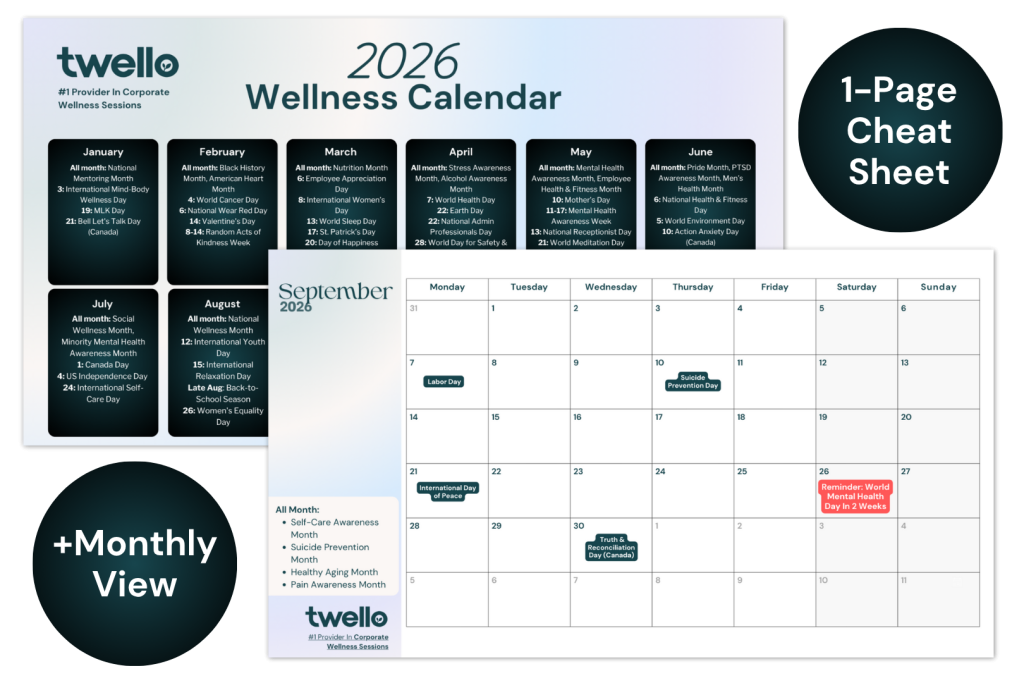
If you’re building a larger engagement strategy for the year, our 2026 Workplace Wellness Calendar can help with additional planning ideas.
Download The Full 2026 Calendar (PDF)
All the important days. None of the “wear a silly hat” days. Plan the whole year in 30 minutes.
Download
2026 Workplace Awareness Days Calendar (At-A-Glance)
June 2026
| Most Commonly Celebrated ✨ | Just-for-Fun Moments 🎉 | Cultural & Religious Observances 🌍 | Additional Observances 🔎 |
|---|---|---|---|
|
The big moments we see HR teams plan for most often.
|
Optional morale-boosters that are easy to sprinkle in.
|
Meaningful and team-specific. Handle with care.
|
Additional observances that may be especially relevant for specific communities or roles.
|
How HR Teams Should Plan June Workplace Wellness Programs
June workplace wellness programs work best when they’re focused, well-paced, and easy for employees to engage with. For most HR teams, the goal isn’t to acknowledge every observance. It’s to choose a few meaningful moments that support inclusion, wellbeing, and employee connection without overwhelming people.
Quick planning guidelines
- Primary focus: Inclusion, safety, and sustainable wellbeing
- Best weeks to activate: Weeks 2–4
- Ideal number of initiatives: 2–3 intentional touchpoints
June tends to bring competing priorities, including PTO schedules, mid-year pressure, and multiple awareness observances happening at once. The strongest June wellness calendars create space for meaningful support without turning the month into a constant stream of campaigns.
Best June Workplace Wellness Themes for Employee Engagement
The most effective June workplace initiatives are practical, approachable, and simple to participate in. Instead of trying to cover every awareness day, focus on a few clear employee outcomes.
Inclusion and belonging
Use Pride Month and Juneteenth to support conversations around inclusion, respect, and psychological safety in ways that feel thoughtful and genuine. Good options include:
- Employee-led discussions
- Educational lunch-and-learns
- Community partnerships
- Inclusive wellbeing programming
Safety and workplace support
National Safety Month creates opportunities to talk about both physical and psychological safety at work. This can include:
- Ergonomic education
- Burnout prevention
- Stress management support
- Manager conversations around workload and boundaries
Sustainable health and wellbeing
Men’s Health Month and International Day of Yoga are good opportunities to encourage sustainable, everyday wellness habits. Simple ideas include:
- Guided movement sessions
- Walking challenges
- Recovery-focused wellness workshops
- Mental health education
- Flexible wellness breaks
If an initiative feels overly complicated or difficult to execute well, it probably doesn’t need to be part of the June calendar.
How People & Culture Teams Use June to Support Employee Wellbeing
Strong People & Culture teams use June to balance awareness with energy management.
In practice, that often looks like:
- One inclusion-focused initiative tied to Pride Month, Juneteenth, or National Indigenous Peoples Day
- One practical wellness session connected to stress management, movement, or mental health
- One visible safety or culture touchpoint during National Safety Month
This approach helps employees stay engaged without creating initiative fatigue.
When June programming feels intentional and manageable, teams are more likely to participate consistently and finish the first half of the year feeling supported instead of stretched thin.
Common Mistakes to Avoid in June Workplace Wellness Programs
- Trying to acknowledge everything: Too many initiatives dilute the moments that matter most.
- Making inclusion feel performative: Awareness efforts should be thoughtful, relevant, and backed by real care.
- Treating safety too narrowly: Don’t limit it to physical risks when psychological safety matters too.
- Over-programming the month: June works better with a few strong touchpoints than a packed calendar.
As always, the best June wellness programs feel supportive, relevant, and realistic for employees to engage with during a busy time of year.


Lets Chat Wellness For Your Team.
- Wellness Classes Your Team Will Actually Enjoy
- Serving Global Teams - Onsite, Virtual & Hybrid
- We Handle Everything - Seamless Planning

How To Celebrate June’s Biggest Observances
🏳️🌈 Pride Month at Work: Ideas for HR Teams (June 2026)
Quick take: Pride Month should feel visible, respectful, and grounded in real inclusion. The goal is not to “celebrate loudly,” but to create signals that LGBTQIA2+ employees are seen, supported, and safe at work.
What to anchor on
- Substance over symbolism: Visible support matters, but it lands better when paired with thoughtful communication, inclusive policies, or meaningful community partnership.
- Keep participation optional: Pride should invite connection, not put pressure on employees to share personal identity or educate others.
- Think beyond one event: The strongest teams treat Pride as part of broader inclusion culture, not a single campaign that disappears on July 1.
Low-lift ideas
- Internal message: Share a short, values-aligned note from leadership acknowledging Pride Month and reinforcing your commitment to inclusion in practical terms.
- Resource spotlight: Curate a small set of optional resources, employee benefits reminders, ERG links, or local/community organizations instead of overbuilding a full campaign.
- Manager nudge: Give people leaders 2–3 simple reminders on inclusive language, respectful meeting norms, and how to avoid making identity-based assumptions.
- Culture signal: Review event language, forms, and internal communications this month to make sure inclusion shows up in the basics, not just in celebration posts.
What to avoid
- Performative messaging with no visible follow-through
- Putting LGBTQIA2+ employees on the spot to share, teach, or represent
- Turning Pride into a branding exercise instead of an employee experience moment
👨 Men’s Health Month at Work: HR-Friendly Ideas (June 2026)
Quick take: Men’s Health Month works best when it focuses on prevention, everyday habits, and normalizing support. The goal is to make health feel approachable, not like another lecture employees will ignore.
What to anchor on
- Lead with accessibility: Keep the focus on realistic habits like movement, sleep, checkups, hydration, and stress support rather than ambitious wellness overhauls.
- Include mental health: Men’s health should not stop at physical risk factors. Strong programming makes room for stress, burnout, and help-seeking without stigma.
- Use credible, low-pressure framing: Employees are more likely to engage with practical prompts than with fear-based statistics or “fix yourself” messaging.
Low-lift ideas
- Anchor (30 minutes): Offer a Good Mood Food, Chair Yoga, or Mindfulness for Improving Sleep session to keep the focus practical and broad.
- Preventive care reminder: Share a short, well-written note encouraging routine checkups, screenings, and use of available health benefits without making it alarmist.
- Micro-habit campaign: Choose one simple theme for the month, like walking breaks, better sleep routines, or hydration, and reinforce it lightly across internal channels.
- Leadership signal: Invite a senior leader to model healthy boundaries or talk honestly about stress, recovery, or the value of getting support.
What to avoid
- Reducing men’s health to fitness challenges or weight-focused messaging
- Using shame, fear, or “tough it out” language
- Making the month so gendered that the advice becomes narrow or exclusionary
🦺 National Safety Month at Work: Ideas for HR Teams (June 2026)
Quick take: National Safety Month is a chance to make safety feel relevant to daily work again. The most useful approach includes physical safety, ergonomic habits, and psychological safety, not just policy reminders.
What to anchor on
- Broaden the definition: Employees experience safety through workstation setup, pace of work, communication norms, and whether it feels safe to raise concerns.
- Focus on prevention over compliance: HR teams usually get better engagement when they teach small protective habits instead of leading with rules alone.
- Keep it workable: A strong June safety message should help employees do their jobs with less strain, not create another heavy training burden.
Low-lift ideas
- Anchor (30 minutes): Offer a Stretch & Soothe session for the physical side or a Creating Psychological Safety workshop for the cultural side.
- Ergonomic refresh: Share a simple workstation checklist employees can use in five minutes, especially for remote and hybrid teams.
- Manager prompt: Encourage leaders to ask one practical question in team meetings: “What’s making work feel harder or less safe than it needs to?”
- Habit cue: Add light reminders for movement breaks, screen breaks, or posture resets in existing channels rather than launching a separate campaign.
What to avoid
- Treating safety as a facilities issue only
- Rolling out dense compliance content with no daily relevance
- Ignoring workload pressure and psychological safety while talking about “wellness”
🧠 PTSD Awareness Month at Work: Ideas for HR Teams (June 2026)
Quick take: PTSD Awareness Month should be approached with care, clarity, and restraint. The goal is to increase understanding and signal support, not create emotionally heavy programming employees did not opt into.
What to anchor on
- Prioritize stigma reduction: The most helpful workplace message is that trauma responses are real, support exists, and no one should have to disclose personal experiences to access care.
- Keep the tone steady: This is not a month for dramatic storytelling or intense awareness campaigns. Quiet, credible support usually lands better.
- Offer regulation-friendly options: Grounding practices, calm communication, and flexible access points are more appropriate than anything overly personal or emotionally demanding.
Low-lift ideas
- Anchor (30 minutes): Host a Break the Stress Cycle session or Real-Time Stress Management workshop to offer broadly useful nervous-system support.
- Resource reminder: Share EAP details, mental health benefits, crisis resources, and support pathways in one easy-to-scan message.
- Quiet participation option: Offer a short optional reset block, guided breathing break, or no-meeting window rather than asking employees to engage publicly.
- Language guidance: Encourage managers to avoid minimizing distress and to respond with steadiness, privacy, and clear next steps when support is needed.
What to avoid
- Asking employees to share trauma-related experiences at work
- Using triggering, graphic, or overly intense campaign language
- Confusing awareness with clinical education that your team is not equipped to deliver
✊🏾 How to Celebrate Juneteenth at Work (June 19, 2026)
Quick take: Juneteenth should be handled with sincerity, context, and restraint. The goal is to make space for learning and reflection without turning the day into a rushed or performative DEI gesture.
What to anchor on
- Center the meaning: Juneteenth marks the end of slavery in the U.S. and should be framed as a historical and cultural moment, not just another awareness date.
- Keep it educational, not extractive: Employees should not feel pressure to explain the day, share personal perspectives, or participate publicly.
- Choose respect over scale: A smaller, thoughtful acknowledgment usually works better than overproduced programming with little substance.
Low-lift ideas
- Leadership note: Share a brief, well-crafted message that acknowledges the day clearly and points employees to optional learning resources.
- Resource curation: Offer a short list of articles, videos, podcasts, or community organizations employees can engage with privately and on their own time.
- Time and space: If possible, reduce nonessential programming that day or give employees more breathing room for reflection rather than packing the calendar.
- Community support: Highlight Black-led organizations, ERG initiatives, or volunteer/donation opportunities in a way that is optional and respectful.
What to avoid
- Posting a vague message with no historical context
- Forcing conversation circles or reflection activities people did not ask for
- Bundling Juneteenth into generic summer engagement content
👔 How to Celebrate Father’s Day at Work (June 21, 2026)
Quick take: Father’s Day is best approached as a caregiver appreciation moment, not a mandatory celebration. The goal is to acknowledge fathers and father figures in a way that feels warm, inclusive, and easy to engage with.
What to anchor on
- Keep the language broad: Recognize fathers, stepfathers, father figures, and caregivers without assuming every employee has a simple or positive relationship with the day.
- Stay light and optional: This works best as a thoughtful culture signal, not a major campaign or emotional spotlight.
- Support real life: Flexibility, visible appreciation, and family-aware scheduling often matter more than elaborate gestures.
Low-lift ideas
- Simple recognition: Share a short internal note acknowledging caregivers and the realities of balancing work and family responsibilities.
- Leadership appreciation: Encourage managers to personally thank team members who are carrying visible caregiving responsibilities, where appropriate and respectful.
- Well-being support: Offer a restorative session such as Balance for Parents & Caregivers or Daily De-Stress: How To Leave Work At Work to support energy and recovery more broadly.
- Small flexibility win: Where possible, make room for lighter scheduling or earlier wrap-ups around the weekend instead of adding another optional event to attend.
What to avoid
- Assuming the day is easy or joyful for everyone
- Overly sentimental campaigns that feel out of sync with workplace tone
- Recognition that excludes nontraditional family structures or caregivers
June Wellness Activations: What to Pair With Key Dates
If you’re planning 2–3 initiatives in June, anchor them to moments employees already recognize. This keeps engagement high and planning manageable.
Below are high-performing wellness pairings based on what HR teams are most likely to book for June themes.
| Wellness Observance | Theme | Recommended Wellness Workshop | Why It Works |
|---|---|---|---|
|
Men’s Health Month
All Month
|
Health Habits |
or
|
Gives teams a practical way to talk about preventive care, recovery, and sustainable habits without making the month feel overly clinical. Especially useful when you want health programming that is credible, broad, and easy to opt into. |
|
PTSD Awareness Month
All Month
|
Stress Support |
or
|
Works best when positioned as steady, stigma-free support rather than heavy awareness programming. These sessions offer practical nervous-system tools employees can use without asking anyone to disclose personal experiences. |
|
National Safety Month
All Month
|
Safety & Prevention |
or
|
Expands safety beyond compliance to include ergonomic strain, daily prevention, and team culture. A strong fit for organizations that want something practical and workplace-relevant without defaulting to dry training. |
|
World Environment Day
June 5, 2026
|
Grounding & Connection |
or
|
Environmental moments tend to land better when they feel calming and reflective, not guilt-heavy. This pairing gives teams a simple way to connect well-being, nature, and a lighter June energy. |
|
Action Anxiety Day (Canada)
June 10, 2026
|
Stress Support |
or
|
Provides a timely, supportive mental health touchpoint without requiring a full month-long campaign. Especially effective for remote and hybrid teams that benefit from practical coping tools employees can apply immediately. |
|
International Yoga Day
June 21, 2026
|
Reset & Recovery |
or
|
One of the easiest June activations to position as a low-lift reset employees will actually enjoy. Works well as a standalone event or as a lighter complement to heavier awareness themes earlier in the month. |
If you only plan one initiative in June, prioritize National Safety Month or Men’s Health Month, depending on whether your team needs more support around workplace habits or broader everyday well-being.
Typical virtual budget range: $400–$600 for up to 200 attendees. Onsite classes are available in select cities.
The 7-Day Activation Plan (No Chaos Required)
You do not need a huge campaign to make June programming land well. Just a simple rhythm.
- 7+ days out: Choose your workshop and lock in the date. Book a consultation if you'd like a tailored recommendation. Book here.
- 5+ days out: Send a short invite or announcement. Keep it clear: what it is, how long it is, and why it is worth stepping away from work for 30 minutes.
- 2 days out: Send a quick reminder with what to expect, cameras-optional reassurance, and a simple note that participation is encouraged but low-pressure.
- Event day: Sit back and relax.
No complicated rollout. No overbuilt campaign. Just timely, supportive programming your team can actually use.
June Wellness Activations: What to Pair With Key Dates
If you’re planning 2–3 initiatives in June, anchor them to moments employees already recognize. This keeps engagement high and planning manageable.
Below are high-performing wellness pairings based on what HR teams are most likely to book for June themes.
Men’s Health Month
All Month
Gives teams a practical way to talk about preventive care, recovery, and sustainable habits without making the month feel overly clinical.
Especially useful when you want health programming that is credible, broad, and easy to opt into.
PTSD Awareness Month
All Month
Works best when positioned as steady, stigma-free support rather than heavy awareness programming.
These sessions offer practical nervous-system tools employees can use without asking anyone to disclose personal experiences.
National Safety Month
All Month
Expands safety beyond compliance to include ergonomic strain, daily prevention, and team culture.
A strong fit for organizations that want something practical and workplace-relevant without defaulting to dry training.
World Environment Day
June 5, 2026
Environmental moments tend to land better when they feel calming and reflective, not guilt-heavy.
This pairing gives teams a simple way to connect well-being, nature, and a lighter June energy.
Action Anxiety Day (Canada)
June 10, 2026
Provides a timely, supportive mental health touchpoint without requiring a full month-long campaign.
Especially effective for remote and hybrid teams that benefit from practical coping tools employees can apply immediately.
International Yoga Day
June 21, 2026
One of the easiest June activations to position as a low-lift reset employees will actually enjoy.
Works well as a standalone event or as a lighter complement to heavier awareness themes earlier in the month.
If you only plan one initiative in June, prioritize National Safety Month or Men’s Health Month, depending on whether your team needs more support around workplace habits or broader everyday well-being.
Typical virtual budget range: $400–$600 for up to 200 attendees. Onsite classes are available in select cities.
The 7-Day Activation Plan (No Chaos Required)
You do not need a huge campaign to make June programming land well. Just a simple rhythm.
- 7+ days out: Choose your workshop and lock in the date. Book a consultation if you'd like a tailored recommendation. Book here.
- 5+ days out: Send a short invite or announcement. Keep it clear: what it is, how long it is, and why it is worth stepping away from work for 30 minutes.
- 2 days out: Send a quick reminder with what to expect, cameras-optional reassurance, and a simple note that participation is encouraged but low-pressure.
- Event day: Sit back and relax.
No complicated rollout. No overbuilt campaign. Just timely, supportive programming your team can actually use.

Book your team's wellness sessions today.
Choose the sessions that fit your team, pick your dates, and check out securely – all in one place.
Just for Fun: Quirky June Workplace Holidays
These work best as Slack moments or coffee-break boosters, no need for a full event.
- Global Day of Parents (June 1): Keep it simple and inclusive. A short Slack prompt inviting people to share a favorite piece of advice from a parent or caregiver usually lands well.
- World Bicycle Day (June 3): Post a quick movement challenge or ask who bikes, spins, or wishes they did. It’s an easy way to spark light conversation around everyday wellness.
- World Oceans Day (June 8): Share a calming ocean photo thread, beach memory prompt, or “dream coastal destination” Slack question. Low-lift and surprisingly good for a midweek mood boost.
- International Yoga Day (June 21): Invite employees to share their favorite stretch, reset habit, or post-lunch recharge ritual. Keep it casual and accessible, not overly serious.
- Social Media Day (June 30): Ask employees to share a favorite creator, wholesome account, or best professional follow. It’s easy, current, and works especially well in remote teams.
Light moments matter, especially in busy months like June.
Explore More HR Awareness Calendars by Month
Frequently Asked Questions
June Awareness Days for HR FAQ
What Are The Most Important Awareness Days In June For HR Teams?
The most widely used June observances are Pride Month, Men’s Health Month, National Safety Month, and PTSD Awareness Month, along with Juneteenth (June 19) and International Yoga Day (June 21).
These give you a strong mix of inclusion, safety, and everyday well-being themes. Most HR teams focus on 2–3 of these rather than trying to cover everything.
What Are Simple Workplace Wellness Ideas For June?
Keep it low-lift and practical. Think one 30-minute session (like stress or movement-based support), a simple awareness message for Pride or Juneteenth, and a few Slack-level prompts or resource shares.
The goal is to support employees without adding more to their plate.
How Many Wellness Initiatives Should HR Plan In June?
Plan for 2–3 intentional initiatives across the month. This could look like one inclusion moment, one well-being session, and one safety or habit-based touchpoint. More than that tends to dilute engagement and create unnecessary pressure.
How Do You Celebrate Pride Month at work?
Focus on thoughtful, visible inclusion rather than big campaigns. A strong approach is a clear leadership message, optional educational resources, and small culture signals like inclusive language and policies. Keep participation optional and avoid putting employees on the spot.
What Are Good National Safety Month Ideas For The Workplace?
The best ideas make safety feel practical and relevant. Offer an ergonomic reset, a short session like Stretch & Soothe or psychological safety training, and light reminders around daily habits like breaks and posture. Keep it simple and focused on prevention, not compliance-heavy training.
How Can HR Celebrate Men’s Health Month?
Center it around accessible, everyday habits like sleep, movement, and preventive care. A single session like Good Mood Food or mindfulness for sleep works well, paired with a light checkup reminder or micro-habit theme. Avoid overly clinical or fitness-only messaging.
Can Twello Help Us Celebrate Or Activate These Awareness Days?
Of course! We offer workshops and ready-to-run activities aligned with many major observances, so HR and People teams can acknowledge important dates without scrambling. Check out our entire catalog here.
Can I Download The 2026 Calendar As A PDF?
Yep, in one click!
The PDF includes a 1-page cheat sheet and the full calendar with room for notes, so you can sketch ideas or flag dates for specific departments. Download here.

Author: Kayla Baum
Founder & CEO, Twello
Kayla Baum is the Founder & CEO of Twello, where she’s helped more than 1,200 organizations, including
KPMG, Amazon, Capital One, and CARE International bring practical, evidence-based wellness into the workday.
Working closely with HR and People & Culture teams every day gives her a grounded perspective on what
actually supports employee well-being (and what never gets used).
Each date on this awareness calendar is vetted through leading health agencies and long-standing
observance organizations, then filtered through Twello’s real-world experience of what workplaces can
realistically acknowledge. No noise. No gimmick days. Just what matters for teams.
Areas of Expertise
Bring Your Workplace Wellness Days To Life
Have questions about workshops, wellness programming, or how to to celebrate?
Fill out the form, and we’ll send over pricing, class recommendations, and samples.